

Acne vulgaris is a multifactorial inflammatory skin disease that affects adolescents and adults worldwide. Traditionally, acne management has focused on pharmacologic interventions such as topical retinoids, antibiotics, hormonal therapy, and isotretinoin. However, patients frequently ask whether diet, stress, sleep, or lifestyle habits contribute to acne development or severity. For decades, the relationship between diet and acne was controversial, largely due to limited and inconsistent scientific evidence.
In recent years, growing research has renewed interest in the role of nutrition and lifestyle factors in acne pathogenesis. Advances in endocrinology, metabolic research, and inflammatory pathways have provided biologically plausible mechanisms linking diet, lifestyle, and acne severity. Contemporary studies suggest that dietary patterns, body mass index (BMI), stress levels, sleep quality, and lifestyle behaviors may influence acne onset, persistence, and recurrence [1];[2].
At Citrine Derma Clinic, dietary and lifestyle counseling is integrated into a holistic, evidence-based acne management strategy. This article reviews the current scientific evidence on diet and lifestyle in acne vulgaris, focusing on glycemic index, dairy consumption, BMI, stress, sleep, and practical, evidence-based patient counseling.
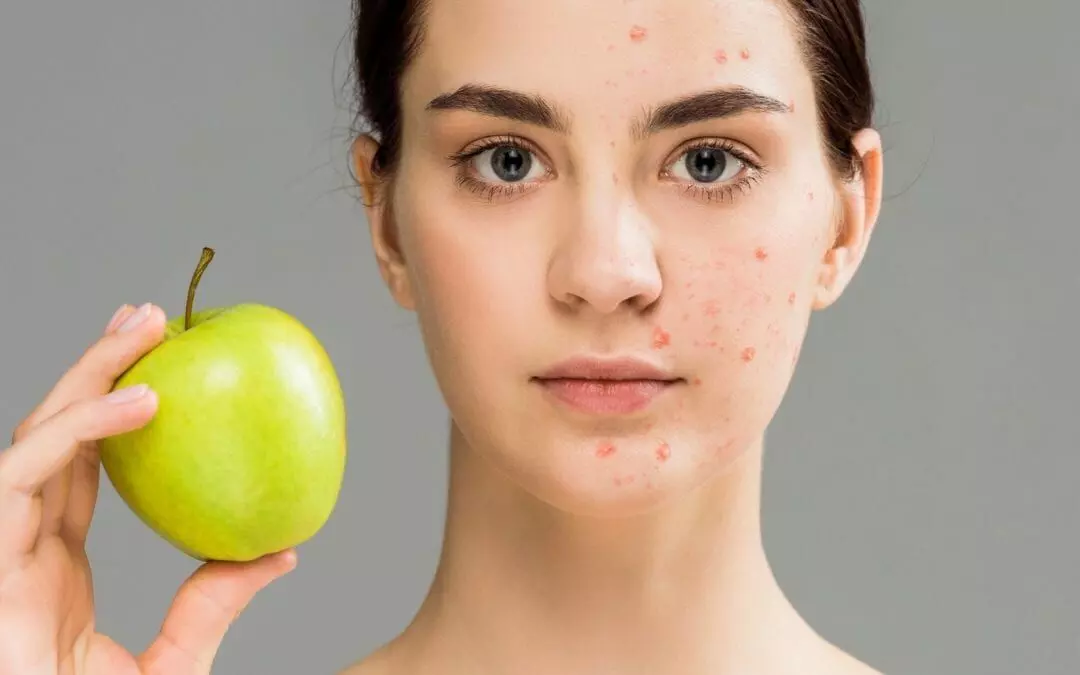
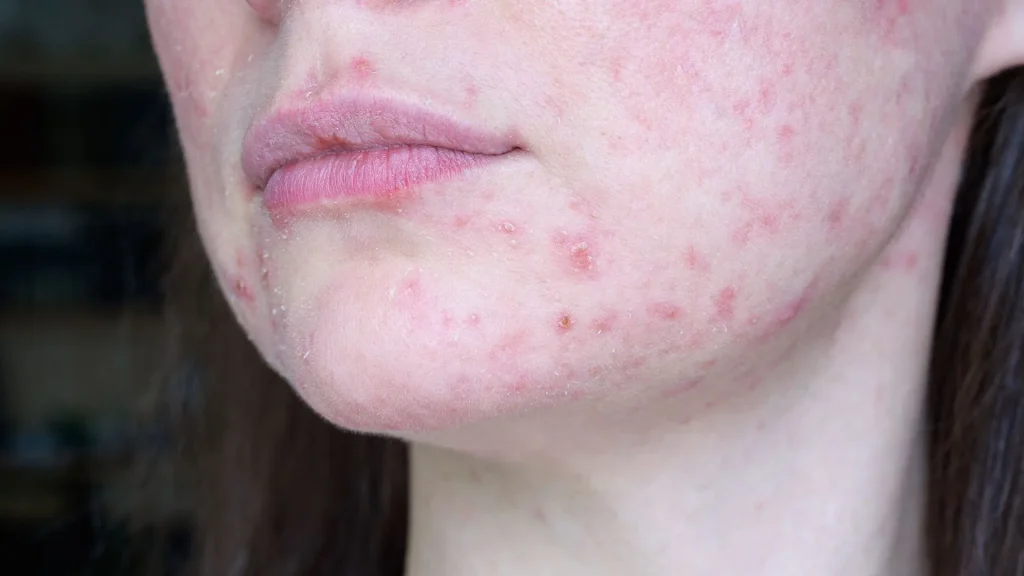
Acne vulgaris is a multifactorial inflammatory skin disease that affects adolescents and adults worldwide
Pathophysiologic links between diet, lifestyle, and acne
Acne pathogenesis involves four core mechanisms: increased sebum production, follicular hyperkeratinization, Cutibacterium acnes proliferation, and inflammation. Diet and lifestyle factors influence acne primarily through hormonal and metabolic pathways, particularly insulin signaling and systemic inflammation.
a. Insulin, IGF-1, and mTORC1 Signaling
High-calorie and high-glycemic diets increase insulin and insulin-like growth factor-1 (IGF-1) levels. These hormones stimulate sebaceous gland activity, androgen signaling, and keratinocyte proliferation. Activation of the mTORC1 pathway further promotes lipid synthesis and inflammation within the pilosebaceous unit, creating an environment conducive to acne development [1].
b. Systemic Inflammation and Metabolic Health
Lifestyle factors such as obesity, physical inactivity, poor sleep, and chronic stress contribute to low-grade systemic inflammation. This inflammatory state may exacerbate acne severity and impair response to conventional therapy, highlighting the importance of addressing metabolic and lifestyle contributors in comprehensive acne care [2].
Glycemic index and acne vulgaris
a. High-Glycemic Diets and Acne Pathogenesis
High-glycemic-index (GI) foods—such as refined carbohydrates, sugary beverages, and processed snacks—rapidly elevate blood glucose and insulin levels. Elevated insulin increases IGF-1 activity, leading to:
- Increased sebum production
- Enhanced follicular keratinization
- Amplified inflammatory signaling
These mechanisms provide a strong biologic rationale linking high-GI diets to acne development and persistence [1].
b. Clinical evidence linking glycemic index to acne severity
Observational and interventional studies have demonstrated that individuals consuming high-GI diets tend to have increased acne prevalence and severity. Conversely, dietary patterns emphasizing low-GI foods—whole grains, legumes, vegetables, and lean proteins—have been associated with improvements in acne lesion counts and overall disease severity.
Recent narrative reviews and population-based studies support the recommendation of low-glycemic dietary patterns as an adjunctive strategy in acne management, although dietary modification alone is not sufficient to replace medical therapy [1],[2].
Dairy consumption and acne severity
a. Types of dairy products and acne risk
Dairy consumption, particularly milk intake, has been repeatedly investigated in relation to acne. Milk contains bioactive molecules, including hormones and growth factors, that may influence IGF-1 signaling and androgen activity.
Some studies suggest that:
- Skim milk may have a stronger association with acne than whole milk
- Fermented dairy products such as yogurt show less consistent associations
The proposed mechanisms include hormonal content, whey protein effects, and insulinotropic properties of dairy products [1].
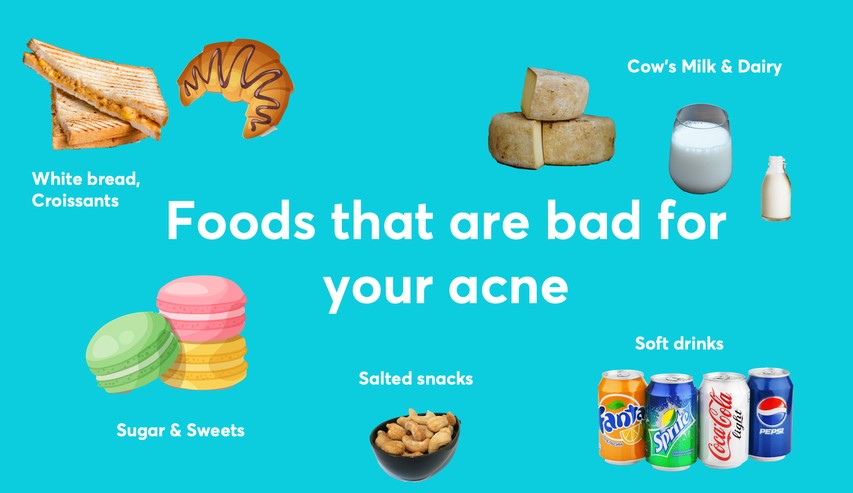
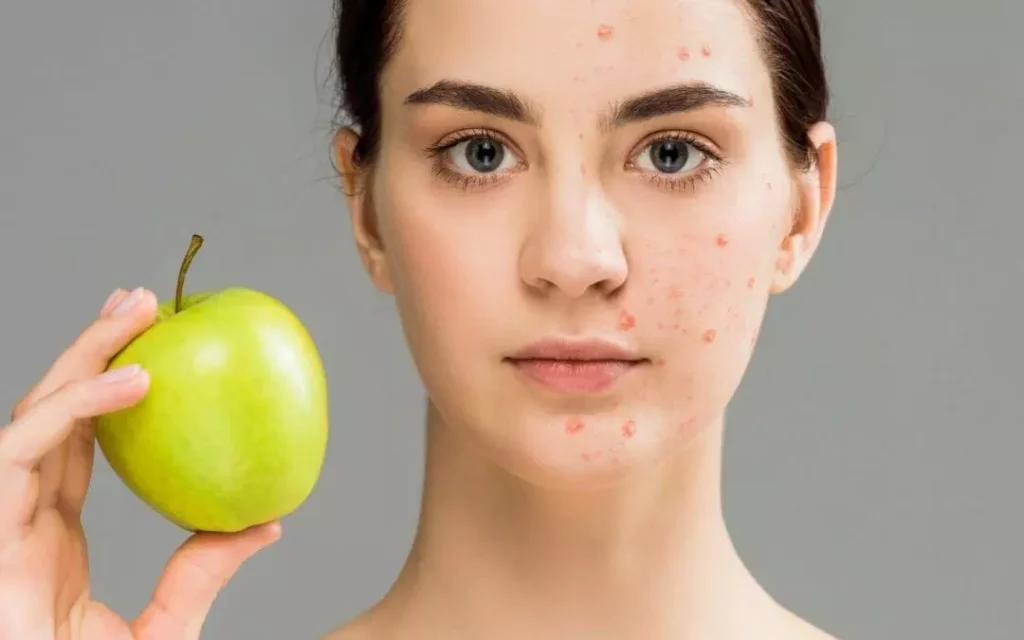
Some foods are bad for your acne
b. Current evidence and limitations
While multiple epidemiologic studies report associations between dairy intake and acne, causality remains difficult to establish. Variability in dietary assessment, population characteristics, and study design limits definitive conclusions. Current evidence supports moderation rather than complete elimination of dairy, particularly in patients who report personal acne flares associated with dairy consumption [1].
Body mass index (BMI), diet, and acne severity
a. Relationship between BMI and acne
Emerging evidence suggests a correlation between higher BMI and increased acne severity. Obesity is associated with insulin resistance, systemic inflammation, and altered hormonal profiles, all of which may exacerbate acne [2].
Recent cross-sectional studies demonstrate that patients with higher BMI may present with more severe inflammatory acne and poorer response to treatment, highlighting the importance of addressing overall metabolic health as part of acne care.
b. Clinical implications
While weight loss is not a primary acne treatment, encouraging healthy eating patterns, physical activity, and metabolic balance may contribute to improved treatment outcomes and long-term disease control [2].
Stress, sleep, and lifestyle factors in acne
a. Psychological stress and acne exacerbation
Psychological stress activates the hypothalamic-pituitary-adrenal (HPA) axis, increasing cortisol and androgen levels. These hormonal changes stimulate sebaceous glands and promote inflammation, potentially triggering acne flares.
Clinical observations consistently report acne worsening during periods of academic stress, occupational pressure, or emotional distress. Stress management strategies may therefore play a supportive role in acne management [1].

Psychological stress
b. Sleep quality and circadian rhythm
Sleep deprivation and poor sleep quality are associated with increased systemic inflammation, impaired skin barrier function, and dysregulated immune responses. Inadequate sleep may also worsen stress levels, creating a vicious cycle that exacerbates acne severity.
Encouraging adequate sleep duration and consistent sleep schedules is a practical, low-risk intervention that supports overall skin health [1],[2].

Lack of sleep can cause acne
Evidence-based counseling for acne patients
a. Translating evidence into practical advice
Despite growing evidence, diet and lifestyle should be positioned as adjunctive—not primary—treatments for acne. Overly restrictive or non-evidence-based diets can lead to nutritional deficiencies and poor adherence.
Evidence-based counseling focuses on:
- Low-glycemic dietary patterns
- Balanced nutrition rather than elimination diets
- Awareness of individual triggers
b. Integrating diet and lifestyle with medical therapy
Medical treatment remains the cornerstone of acne management. Diet and lifestyle modification should complement:
- Topical retinoids and benzoyl peroxide
- Hormonal therapy in selected patients
- Procedural dermatology when indicated
This integrated approach improves long-term outcomes and patient satisfaction [1].
c. Patient education and adherence
Misinformation about “acne diets” is widespread. Dermatologist-led education is essential to:
- Address myths and unrealistic expectations
- Promote sustainable lifestyle changes
- Improve adherence to medical therapy
At Citrine Derma Clinic, patient education is emphasized as a key component of comprehensive acne management, empowering patients to make informed decisions without unnecessary dietary restrictions.
Role of diet and lifestyle in holistic acne care at Citrine Derma Clinic
At Citrine Derma Clinic, diet and lifestyle counseling is integrated into a holistic, dermatologist-led acne treatment model. Rather than promoting rigid dietary rules, clinicians focus on personalized guidance, metabolic health, stress management, and long-term maintenance strategies, aligned with current scientific evidence.
Conclusion
The relationship between diet, lifestyle, and acne vulgaris is complex and multifactorial. Current evidence supports a modest but meaningful role for dietary patterns, BMI, stress, and sleep in influencing acne severity and treatment outcomes.
Low-glycemic diets, mindful dairy consumption, healthy lifestyle habits, and stress management can serve as valuable adjuncts to medical therapy. When incorporated into a holistic, evidence-based treatment plan—as practiced at Citrine Derma Clinic—diet and lifestyle modification can support sustained acne control, reduce recurrence, and enhance overall skin health.
References
- Alsindi, Z., Alharbi, R., Alhadi, E., AlRadhwan, N., Aljahdali, W., Alghamdi, S., & Alzahrani, K. (2026). Exploring the impact of nutrition and lifestyle in the pathogenesis of acne vulgaris. Saudi Medical Horizons Journal, 6(1), 1–16.
- Al-Hattab, M. K., Abbass, Z. J., Fakhry, F. A., & Sahib, N. H. (2024). Relationship between BMI, dietary and lifestyle characteristics and the severity of acne vulgaris. Hammurabi Journal of Medical Sciences, 1(1), 31–38.
- Điều Trị Nám Lâu Năm – Laser Fotona Có Phải Là Lựa Chọn Phù Hợp?
- Giải Pháp Điều Trị Sẹo Lồi, Sẹo Rỗ Với Laser CO2
- Trị Quầng Thâm Mắt Bằng Laser – Đánh Thức Vẻ Tươi Trẻ Cho Đôi Mắt
- Nâng Cơ Xoá Nhăn Không Phẫu Thuật Với Công Nghệ Liftera
- Cấy Sáng Da Mesotherapy – Bước Đột Phá Mới Cho Da Căng Bóng, Không Sạm Nám