

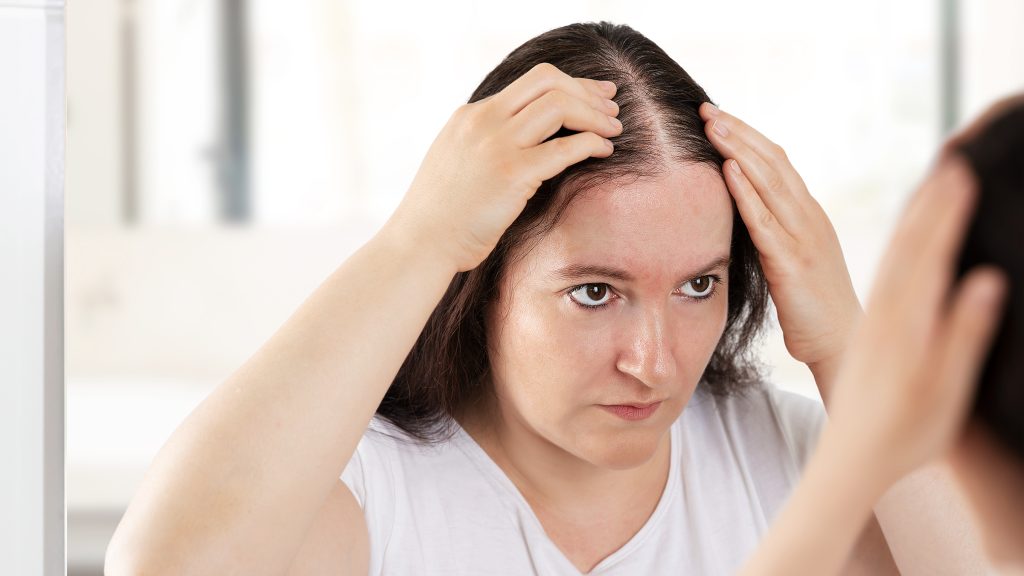
Hair loss in women is a common yet often underestimated medical condition that can significantly affect self-esteem, emotional well-being, and quality of life. Unlike men, women usually experience diffuse hair thinning rather than complete baldness, making early changes subtle but deeply distressing. Many women delay seeking medical care, assuming hair loss is a normal part of aging, stress, or motherhood—when in fact, it may signal underlying hormonal, nutritional, or systemic disorders.
From postpartum shedding and polycystic ovary syndrome (PCOS) to thyroid disease, iron deficiency, and menopause-related changes, female hair loss is strongly influenced by hormonal fluctuations and life stages. Modern dermatology recognizes female hair loss as a multifactorial medical condition that requires accurate diagnosis and individualized treatment rather than cosmetic solutions alone.
At Citrine Derma Clinic, women’s hair loss is evaluated and treated through a medical, evidence-based, and personalized approach, guided by international dermatology research and clinical expertise. This article provides a comprehensive overview of hair loss in women, its most common causes, diagnostic principles, and modern management strategies, supported by leading medical literature [1][2][3].

Hair loss in women is a common yet often underestimated medical condition
Understanding female hair biology
Hair growth follows a cyclical process consisting of:
- Anagen (growth phase)
- Catagen (transition phase)
- Telogen (resting and shedding phase)
In women, hormones—especially estrogen, progesterone, and androgens—play a crucial role in regulating this cycle. Estrogen prolongs the anagen phase, supporting hair density and thickness. When estrogen levels fluctuate or decline, hair follicles become more vulnerable to shedding and miniaturization [1].
This hormonal sensitivity explains why hair loss often coincides with key life events such as childbirth, endocrine disorders, and menopause.
Common types of hair loss in women
a. Female pattern hair loss (FPHL)
Female pattern hair loss is the most common cause of chronic hair thinning in women.
Clinical features include:
- Diffuse thinning over the crown and mid-scalp
- Preservation of the frontal hairline
- Gradual progression over years
FPHL is influenced by genetic predisposition and androgen sensitivity, even when androgen levels are within the normal range. Trichoscopy often reveals variation in hair shaft diameter and follicular miniaturization [1][3].
At Citrine Derma Clinic, early diagnosis of FPHL allows timely intervention to slow progression and preserve hair density.
b. Postpartum Telogen Effluvium
Hair loss after childbirth is extremely common and often alarming for new mothers.
Pathophysiology:
- During pregnancy, elevated estrogen levels prolong the growth phase
- After delivery, sudden estrogen withdrawal causes many hairs to enter the telogen phase simultaneously
- Excessive shedding typically occurs 2–4 months postpartum
This condition, known as postpartum telogen effluvium, is usually temporary and self-limiting. Most women experience gradual regrowth within 6–12 months [2].
Hormonal and endocrine causes of hair loss in women
a. Polycystic Ovary Syndrome (PCOS)
PCOS is a common endocrine disorder characterized by hyperandrogenism, menstrual irregularities, and metabolic disturbances.
Hair-related features include:
- Diffuse thinning or pattern hair loss
- Coexisting acne or hirsutism
- Gradual progression over time
PCOS-related hair loss requires a multidisciplinary approach, addressing both hormonal imbalance and scalp health [1][2].
b. Thyroid Disease
Both hypothyroidism and hyperthyroidism can disrupt the hair growth cycle.
Typical features include:
- Diffuse hair thinning
- Dry, brittle hair texture
- Associated systemic symptoms (fatigue, weight changes)
Hair loss due to thyroid disease is often reversible once thyroid function is properly treated, highlighting the importance of medical evaluation [1].
Nutritional deficiencies and hair loss
a. Iron Deficiency
Iron deficiency is one of the most common and overlooked causes of hair loss in women, particularly those of reproductive age.
Low iron stores affect:
- Hair follicle energy metabolism
- Keratin production
- Anagen phase duration
Studies suggest that low serum ferritin levels may contribute to diffuse hair shedding, even in the absence of anemia [2][3].

Iron Deficiency
b. Other Micronutrients
- Vitamin D
- Zinc
- Protein intake
Deficiencies may exacerbate hair loss and impair regrowth if left uncorrected.
Menopause and age-related hair changes
During menopause, declining estrogen levels lead to:
- Shorter hair growth cycles
- Reduced hair shaft diameter
- Relative increase in androgen influence
Menopausal hair loss often overlaps with female pattern hair loss and age-related follicular changes. Many women notice decreased hair volume, slower growth, and changes in texture [1][3].
At Citrine Derma Clinic, menopausal hair loss is managed with individualized treatment plans that balance efficacy, safety, and long-term maintenance.
Diagnostic approach to hair loss in women
Accurate diagnosis is essential for effective treatment. A comprehensive evaluation typically includes:
- Detailed medical, menstrual, and reproductive history
- Scalp and hair examination
- Trichoscopy (digital dermoscopy)
- Laboratory tests (iron studies, thyroid function, hormones)
- Scalp biopsy in selected cases
This structured approach aligns with international dermatology guidelines [1].
Medical and supportive management
Management of female hair loss depends on the underlying cause and may include:
- Evidence-based medical therapies
- Hormonal evaluation and correction
- Nutritional optimization
- Scalp-directed treatments
- Cosmetic and psychological support
As emphasized by Sinclair et al. [3], combining medical and cosmetic strategies often improves both objective outcomes and patient satisfaction.
Psychological impact of hair loss in women
Hair loss can profoundly affect a woman’s self-image, confidence, and mental health. Anxiety, depression, and social withdrawal are not uncommon.
At Citrine Derma Clinic, compassionate communication, education, and long-term follow-up are considered essential components of comprehensive hair loss care.
Conclusion
Hair loss in women is a complex, hormone-sensitive, and multifactorial medical condition. From postpartum shedding and PCOS to thyroid disease, iron deficiency, and menopause, understanding the underlying cause is critical for effective treatment. Early diagnosis and evidence-based management significantly improve outcomes and quality of life.
At Citrine Derma Clinic, women receive expert dermatological care grounded in scientific evidence, personalized assessment, and long-term support. If you are experiencing persistent hair loss or thinning, professional evaluation is the first step toward restoring hair health and confidence.
👉 Book your consultation today for digital hair follicle analysis and a personalized treatment plan with our doctors.
References
- Olsen, E. A. (2025). Hair loss in women. New England Journal of Medicine, 393(15), 1509–1520.
- Sadick, N., & Arruda, S. (2021). Understanding causes of hair loss in women. Dermatologic Clinics, 39(3), 371–374.
- Sinclair, R., Patel, M., Dawson, T. L., Yazdabadi, A., Yip, L., Perez, A., & Rufaut, N. W. (2011). Hair loss in women: Medical and cosmetic approaches to increase scalp hair fullness. British Journal of Dermatology, 165(Suppl. 3), 12–18.
- Laser Acne Scar Treatment Combined with Subcision – An Effective Solution for Atrophic Scars
- Điều Trị Nám & Trẻ Hóa Da Bằng Laser Fotona
- Nguyên Nhân Môi Thâm Và Khô Nứt – Giải Pháp Phục Hồi Môi Tự Nhiên Bằng Laser
- Khi Mỹ Phẩm Gây Viêm Da Tiếp Xúc – Phục Hồi Da An Toàn Bằng Công Nghệ Cao
- Bao Lâu Thì Hết Nám? Bí Quyết Rút Ngắn Thời Gian Điều Trị Nám & Tối Ưu Hiệu Quả