

Acne vulgaris is one of the most common chronic inflammatory skin diseases worldwide, affecting both adolescents and adults. While standard acne treatments are generally effective, a growing subset of patients presents with acne in sensitive and barrier-impaired skin, posing significant therapeutic challenges. These patients often experience burning, stinging, erythema, dryness, and intolerance to conventional acne therapies, leading to poor adherence and suboptimal outcomes.
Sensitive skin is increasingly recognized as a clinical condition characterized by heightened neurosensory responses and impaired skin barrier function. When acne coexists with barrier dysfunction, traditional acne regimens—such as topical retinoids, benzoyl peroxide, and exfoliating agents—may exacerbate irritation, inflammation, and treatment discontinuation [1]. This clinical reality has driven a paradigm shift toward barrier-focused and holistic acne management.
At Citrine Derma Clinic, acne treatment strategies emphasize not only lesion clearance but also restoration of skin barrier integrity and long-term skin quality. This article explores the pathophysiology, clinical features, and evidence-based solutions for managing acne in sensitive and barrier-impaired skin, drawing on current international literature.
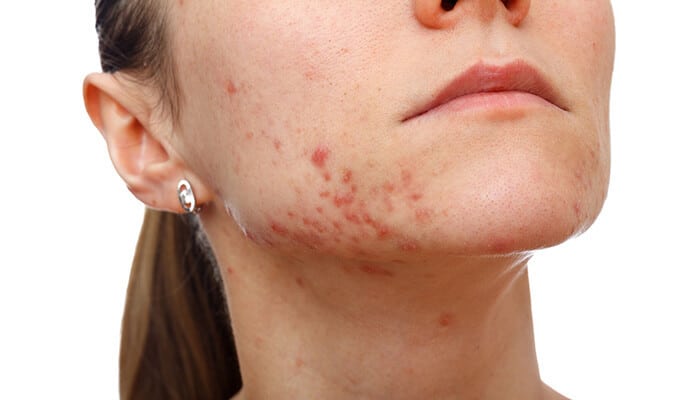
Acne vulgaris
Understanding Skin Barrier Dysfunction in Acne
a. The Role of the Skin Barrier
The skin barrier, primarily located in the stratum corneum, plays a critical role in maintaining hydration, protecting against microbial invasion, and regulating inflammatory responses. It consists of corneocytes embedded in a lipid matrix composed of ceramides, cholesterol, and free fatty acids.
When intact, the barrier limits transepidermal water loss (TEWL) and prevents penetration of irritants. In sensitive and acne-prone skin, however, this barrier is often compromised, resulting in increased permeability and inflammatory susceptibility.
b. Mechanisms of Barrier Impairment in Acne
Several mechanisms contribute to barrier dysfunction in acne patients:
- Altered sebum composition and inflammation disrupt lipid organization
- Topical acne treatments, particularly retinoids and benzoyl peroxide, increase epidermal turnover and TEWL
- Neurogenic inflammation heightens sensory responses such as stinging and burning
Clinical studies demonstrate that patients with acne and sensitive skin exhibit higher TEWL, reduced hydration, and increased neurosensory reactivity compared with non-sensitive counterparts [1].
Clinical Characteristics of Acne in Sensitive Skin
a. Defining Acne with Sensitive Skin
Acne in sensitive skin is not a distinct acne subtype but rather a clinical phenotype characterized by acne lesions accompanied by heightened cutaneous reactivity. Common features include:
- Burning, stinging, or itching sensations
- Persistent erythema
- Dryness and scaling
- Rapid irritation upon product application
These symptoms may occur even with mild acne severity and significantly affect quality of life.
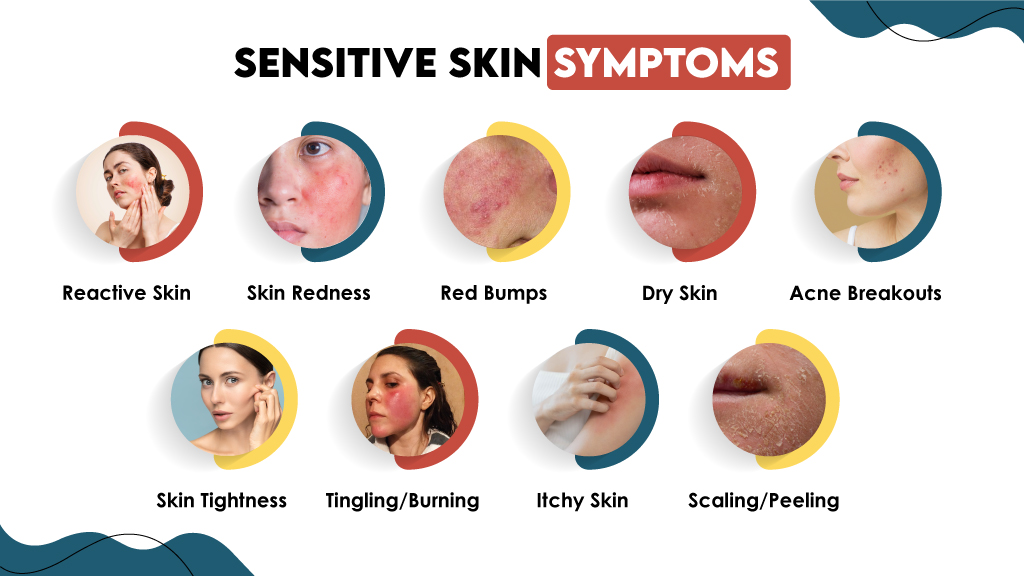
Sensitive skin symtoms
b. Impact on Quality of Life and Treatment Outcomes
Patients with sensitive, barrier-impaired skin are more likely to experience:
- Early discontinuation of treatment
- Fear of active ingredients
- Poor adherence to long-term regimens
Recent literature highlights that treatment intolerance—not lack of efficacy—is a leading cause of acne treatment failure in sensitive skin populations [1];[2].
Treatment-Related Irritation and Intolerance
a. Common Irritating Acne Therapies
Several cornerstone acne treatments are associated with irritation, particularly in barrier-impaired skin:
- Topical retinoids: erythema, peeling, burning
- Benzoyl peroxide: dryness, irritant dermatitis
- Chemical exfoliants: cumulative barrier damage when overused
In sensitive skin, even low concentrations may provoke exaggerated responses.
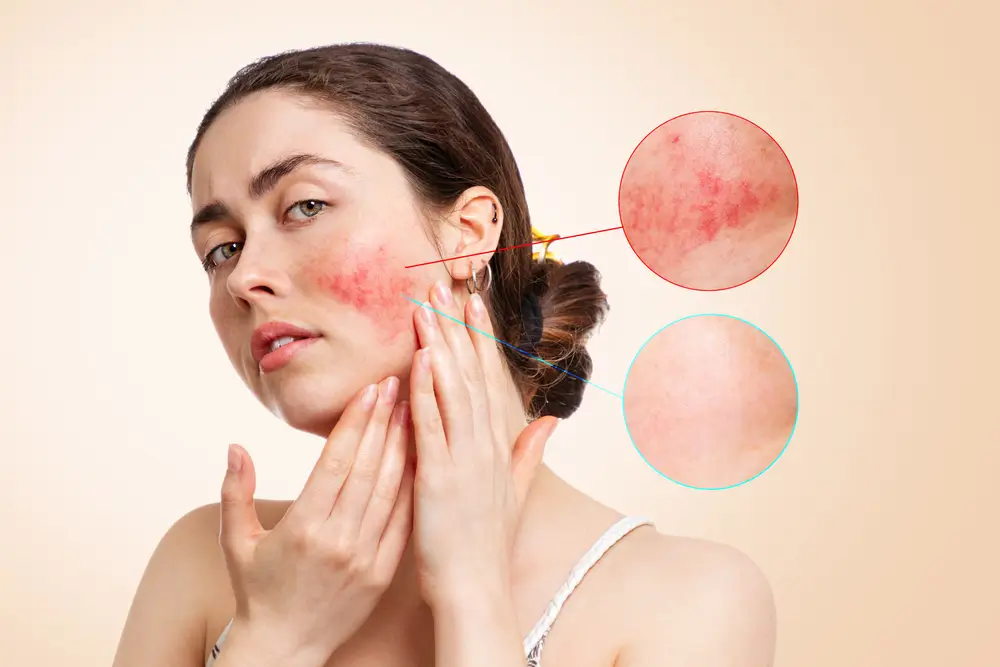
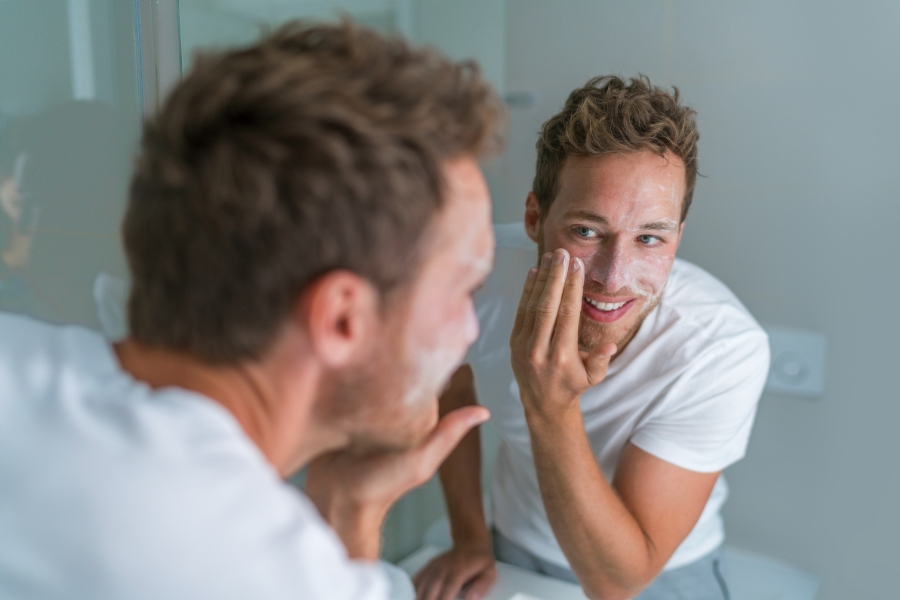
People with sensitive skin are easily irritated upon skincare product application
b. Risk Factors for Treatment Intolerance
Factors increasing the likelihood of irritation include:
- High application frequency
- Lack of moisturization
- Concurrent use of multiple active agents
- Pre-existing sensitive skin conditions
Recognizing these risk factors is essential for individualized acne management [1].
Role of Gentle Skincare and Barrier Repair
a. Why Barrier Repair Is Central to Acne Care
Barrier repair is no longer viewed as optional supportive care but as a core component of acne management, particularly in sensitive skin. Restoring barrier integrity:
- Reduces inflammation and neurosensory symptoms
- Improves tolerance to active acne treatments
- Enhances long-term adherence and outcomes
Evidence suggests that addressing barrier dysfunction early can significantly improve both efficacy and patient satisfaction [2].
b. Evidence-Based Skincare Strategies
Key elements of barrier-focused skincare include:
- Gentle, low-surfactant cleansers
- Non-comedogenic moisturizers applied consistently
- Barrier-supportive ingredients such as ceramides, niacinamide, panthenol, and glycerin
- Avoidance of excessive exfoliation and alcohol-based products
The “skin quality first” approach emphasizes maintaining comfort and resilience while treating acne [2].
At Citrine Derma Clinic, skincare routines are tailored to support barrier repair before and during active acne treatment.
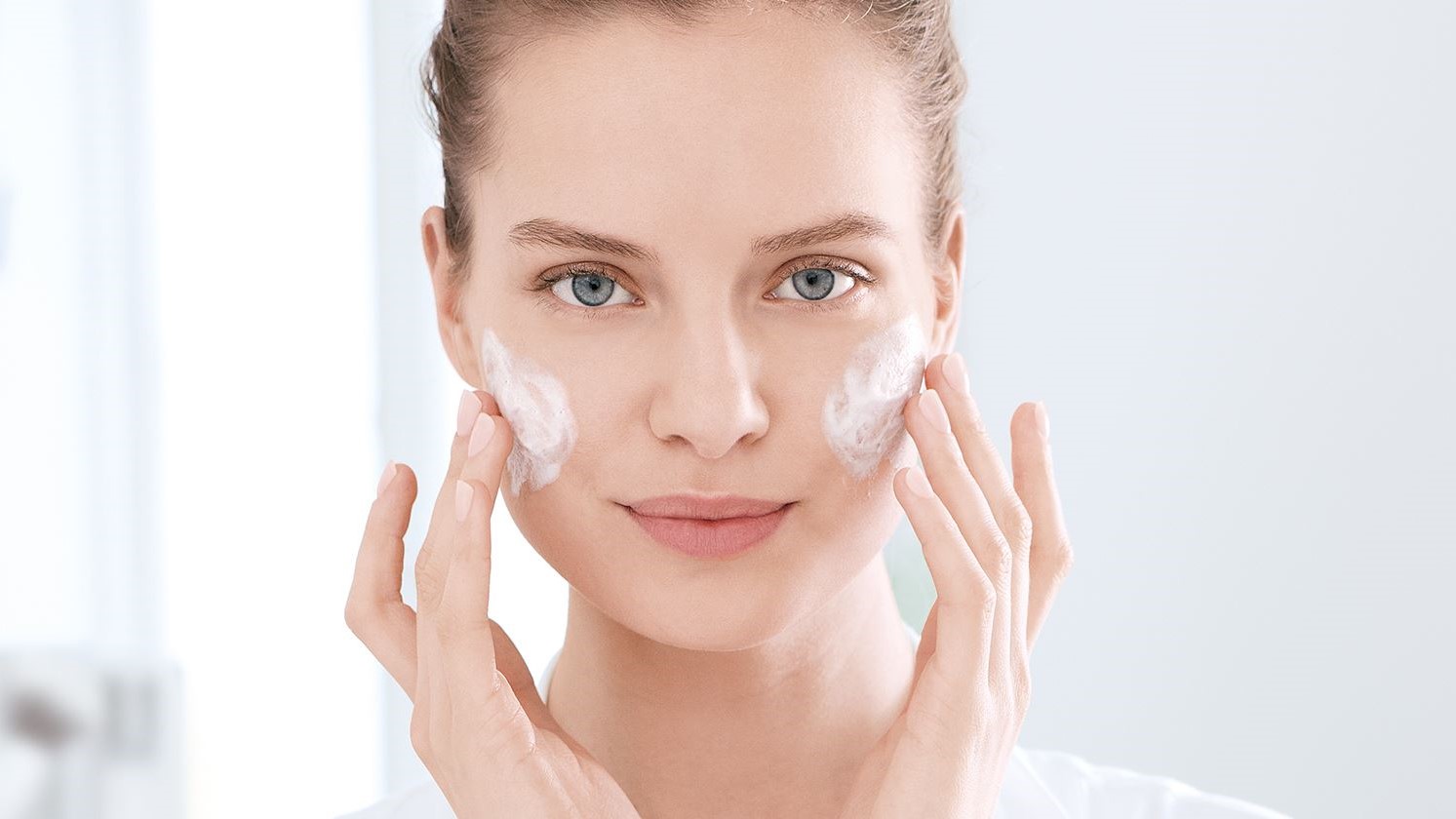
Gentle, low-surfactant cleansers
Integrating Medical Treatment with Barrier-Focused Care
a. Adjusting Acne Therapy for Sensitive Skin
Evidence-based strategies for reducing irritation include:
- Initiating retinoids at low frequency (e.g., alternate nights)
- Gradual dose escalation (“retinization”)
- Using short-contact therapy when appropriate
- Pairing actives with barrier-repair moisturizers
These approaches allow patients to benefit from effective acne treatments without compromising skin tolerance [1].
b. Holistic Acne Management Approach
The One Acne™ holistic management concept emphasizes treating acne while preserving overall skin quality, regardless of skin sensitivity status [2]. This approach integrates:
- Medical therapy
- Gentle skincare
- Patient education
- Long-term maintenance strategies
Such models are increasingly adopted in modern dermatologic practice and align with real-world patient needs.
Improving Adherence and Long-Term Outcomes
a. Patient Education and Expectation Management
Clear communication is essential to distinguish:
- Expected transient irritation
- True intolerance requiring regimen modification
Educating patients about barrier care, treatment timelines, and realistic outcomes significantly improves adherence and trust.
b. Long-term Maintenance Strategies
For sensitive skin patients, maintenance therapy focuses on:
- Sustained barrier repair
- Minimal effective dosing of active agents
- Prevention of relapse without over-treatment
This strategy reduces treatment fatigue and supports durable acne control [1];[2].
Role of Citrine Derma Clinic in Managing Acne with Sensitive Skin
At Citrine Derma Clinic, acne in sensitive and barrier-impaired skin is managed through a dermatologist-led, individualized approach. Treatment plans prioritize barrier restoration, gentle skincare, and evidence-based medical therapy, ensuring both efficacy and comfort.
By addressing skin sensitivity proactively, Citrine Derma Clinic helps patients achieve clearer skin while maintaining long-term skin health and confidence.
Conclusion
Acne in sensitive and barrier-impaired skin represents a common yet challenging clinical scenario. Barrier dysfunction, treatment intolerance, and poor adherence often hinder successful outcomes. Current evidence supports a holistic, barrier-focused approach that integrates gentle skincare, individualized medical therapy, and patient education.
When implemented thoughtfully—as practiced at Citrine Derma Clinic—this strategy improves tolerance, adherence, and long-term acne control, ultimately enhancing both skin health and quality of life.
References
- Sheng, A., Zhou, M., Hu, W., Jin, R., Bian, K., Hua, Y., & Xu, A. E. (2023). Clinical characteristics and treatment of acne with sensitive skin. Dermatologic Therapy, 2023(1), 6528850.
- Kircik, L., Tan, J., Lain, E., Beleznay, K., Chavda, R., Lachmann, N., & Layton, A. M. (2025). One Acne™: A holistic management approach to improve overall skin quality and treatment outcomes in acne with or without sensitive skin. International Journal of Dermatology, 64(4), 637–646.