

Acne treatment remains one of the most important challenges in modern dermatology, as acne vulgaris is among the most prevalent skin conditions worldwide, affecting over 80% of adolescents and adults at some point in their lives. Although acne is not a life-threatening disorder, its long-term sequelae—including post-inflammatory hyperpigmentation (PIH), acne scarring, uneven skin texture, and psychological distress—can significantly compromise quality of life and self-confidence.
In contemporary dermatologic practice, acne treatment is no longer limited to oral medications or topical therapies alone. Advances in evidence-based dermatology have introduced in-clinic procedures that offer safer, faster, and more effective outcomes. Among these, medical chemical peeling (medical-grade chemical exfoliation) has become a dermatologist-recommended modality, particularly at Citrine Derma Clinic, a trusted dermatology clinic in District 7.
Unlike home-use peels or spa-based exfoliation, medical chemical peels are controlled clinical procedures performed in a sterile medical setting under the supervision of licensed dermatologists. This approach ensures optimal safety, individualized treatment protocols, and predictable results for various skin types, including sensitive and acne-prone skin.
This article is presented from the professional perspective of MD Chau Ngoc To Trinh, a reputable dermatologist in District 7, currently practicing at Citrine Derma Clinic, a well-established dermatology clinic in Ho Chi Minh City. The aim is to provide patients with a clear understanding of the mechanisms, clinical effectiveness, scientific evidence, and treatment protocols of chemical peels in comprehensive acne treatment.
Chemical peel
What is a chemical peel?
a. Difference between medical chemical peel and at-home peel
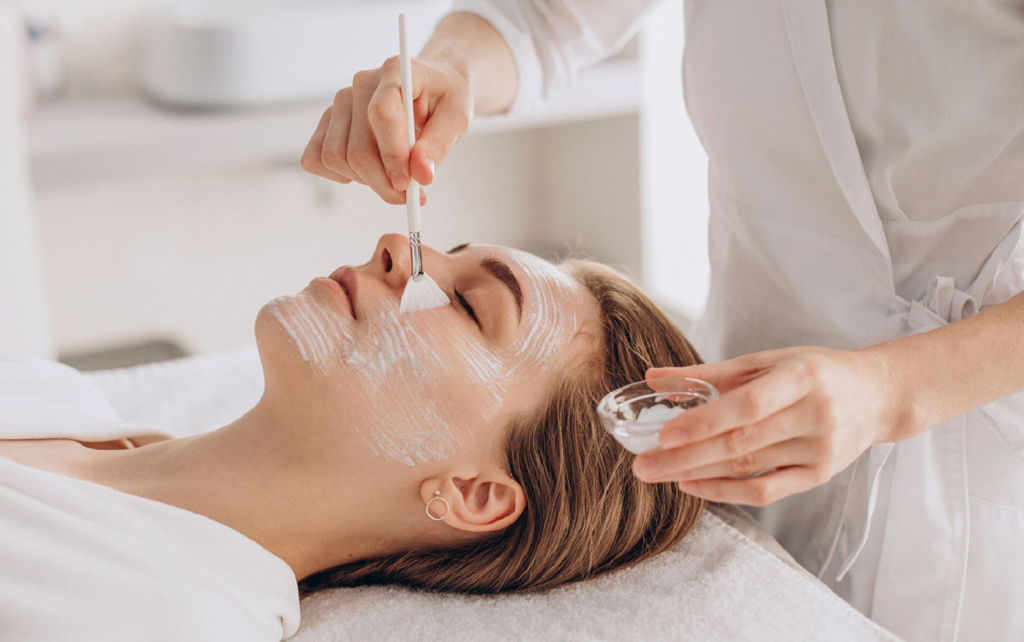
A chemical peel is a dermatological procedure that uses medical-grade acidic solutions—such as AHA, BHA, TCA, Mandelic Acid, or Jessner’s solution—to exfoliate the outer layers of the skin. This process removes dead skin cells, unclogs pores, regulates sebum production, and stimulates new cell turnover.
b. Classification by depth of action
- Superficial peel: Targets the stratum corneum; suitable for mild acne, oily skin, and dull complexion.
- Medium-depth peel: Penetrates deeper into the epidermis; effective for inflammatory acne, post-acne marks, and shallow scars.
- Deep peel: Reserved for advanced cases such as severe scarring or photoaging and must be performed strictly by dermatologists.
c. Medical peel vs. home peel
| Criteria | Medical Chemical Peel | At-home Peel |
| Acid concentration | Medical-grade, customized | Low, fixed |
| Supervision | Licensed dermatologist | None |
| Safety | High, controlled | High risk of irritation |
| Results | Faster, long-lasting | Limited, temporary |
| Risk of PIH | Minimized | Higher |
At Citrine Derma Clinic, every peel is individualized based on skin type, acne severity, and patient history—one of the reasons why it is considered a good dermatology clinic in District 7.
Mechanism of action of chemical peels in acne treatment
When a chemical peeling solution is applied to the skin, it works by breaking down the bonds between corneocytes, allowing damaged and clogged skin layers to shed in a controlled manner. This process leads to several therapeutic benefits:
- Deep pore cleansing, removing excess sebum, debris, and acne-causing bacteria (Cutibacterium acnes).
- Sebum regulation, reducing the formation of new comedones.
- Anti-inflammatory effects, calming red, inflamed acne lesions.
- Skin tone improvement, reducing post-acne hyperpigmentation.
According to Castillo & Keri (2018), chemical peels “enhance cell turnover, normalize keratinization, and significantly reduce inflammation,” making them especially effective for mild to moderate acne [2].
Common acids used in medical chemical peels for acne
At Citrine Derma Clinic, dermatologists select peeling agents based on skin characteristics and acne type:
a. Salicylic Acid (BHA)
- Oil-soluble, penetrates deeply into pores
- Excellent for oily skin, blackheads, and inflammatory acne
b. Glycolic Acid (AHA)
- Improves exfoliation and skin brightness
- Ideal for dull skin and post-acne marks
c. Mandelic Acid
- Larger molecular size, gentle penetration
- Suitable for sensitive skin and uneven tone
d. Jessner’s Peel
- Combination of lactic acid, salicylic acid, and resorcinol
- Strong antibacterial and keratolytic effects
e. Trichloroacetic Acid (TCA)
- Used in medium-depth peels
- Indicated for acne scars and photoaged skin
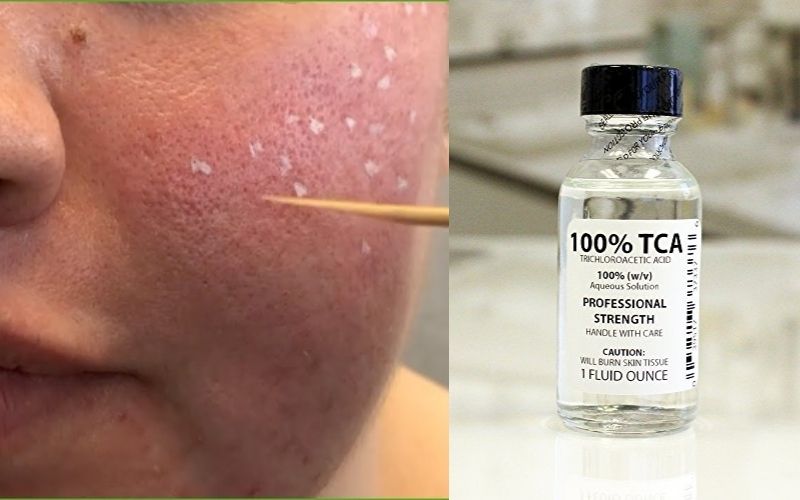
Trichloroacetic Acid (TCA)
Medical chemical peel procedure at Citrine Derma Clinic
As a leading dermatology clinic in District 7, Citrine Derma Clinic strictly follows Vietnam Ministry of Health standards:
1. Dermatological consultation & skin analysis using multi-spectral imaging.
2. Cleansing and disinfection to ensure a sterile environment.
3. Customized peel selection (type, concentration, exposure time).
4. Neutralization (if required) and application of calming masks.
5. Post-peel recovery serums such as HA Restorative, Elevai stem cells, or Hydrinity.
6. Aftercare guidance and follow-up after 7–10 days.
“Chemical peeling is not just exfoliation—it is a controlled medical treatment. When done correctly, it significantly reduces inflammation and acne recurrence,”
— MD Chau Ngoc To Trinh, Citrine Derma Clinic
Medical evidence supporting chemical peels for acne
- Al-Talib et al. (2017) reported that over 75% of patients showed significant improvement in comedonal and inflammatory acne after superficial chemical peels [1].
- Castillo & Keri (2018) reviewed 17 clinical studies and concluded that chemical peels improve up to 80% of mild–moderate acne cases, while enhancing topical drug absorption [2].
At Citrine Derma Clinic, chemical peels are often combined with biological light therapy, IPL, or laser treatments, accelerating acne clearance and reducing recurrence—an advanced protocol offered by good dermatologists in Ho Chi Minh City.
Pre- and post-peel care guidelines
a. Before the peel
- Discontinue retinoids, AHA/BHA for 3–5 days
- Avoid mechanical exfoliation
- Inform the dermatologist about isotretinoin use or allergies
b. After the peel
- Strict sun protection for at least 7 days
- Intensive hydration (HA, B5 serums)
- Avoid harsh cleansers or acids
- Follow-up as scheduled
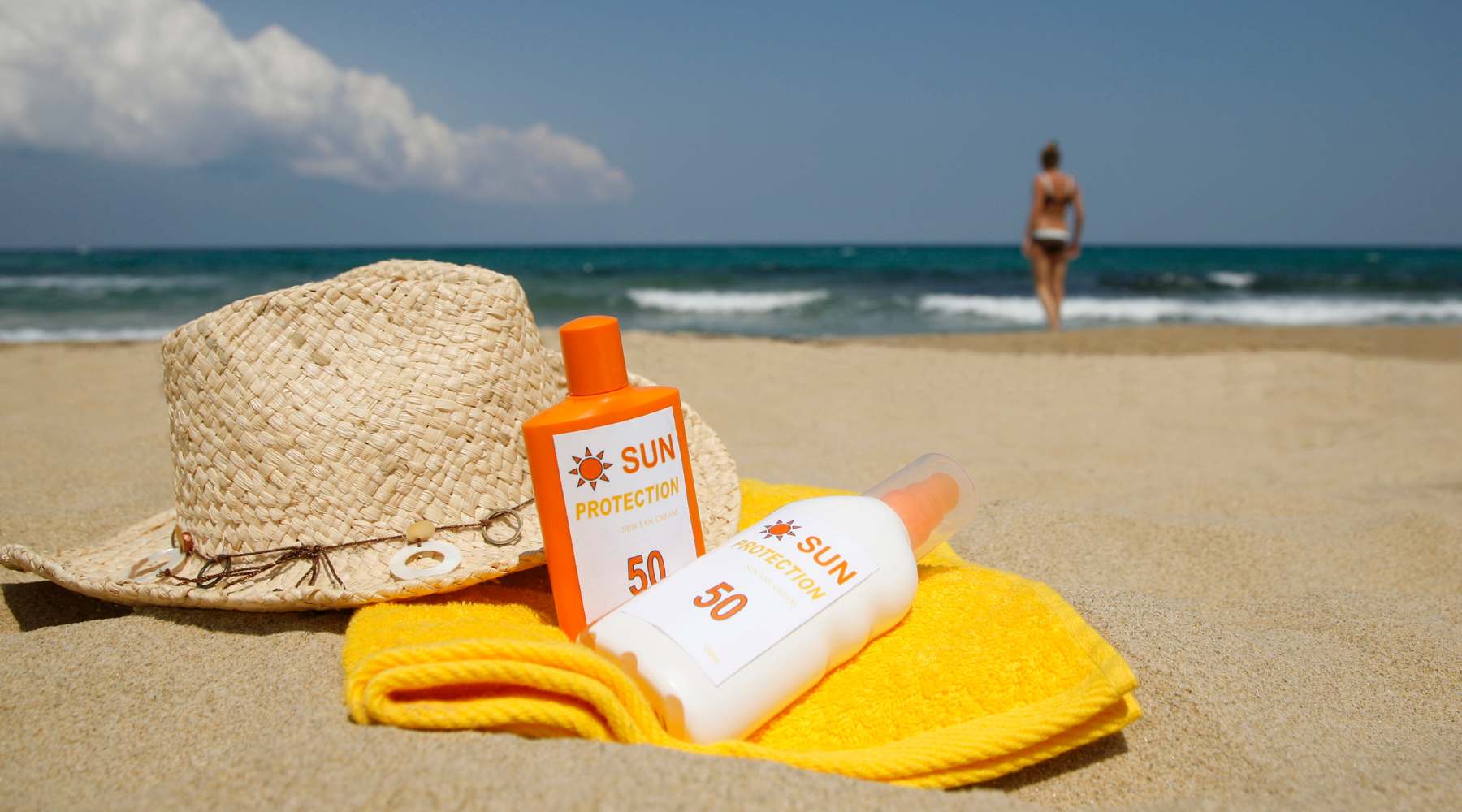
Strict sun protection for at least 7 days
A holistic approach to healthy, clear skin
Medical chemical peeling is more than an acne treatment — it is a skin regeneration therapy. When performed by a good dermatologist in District 7 at Citrine Derma Clinic, patients can expect:
- Clearer skin with reduced inflammation
- Minimized acne recurrence
- Improved skin tone and texture
- Enhanced overall skin health
✨ Citrine Derma Clinic is a trusted dermatology clinic in Ho Chi Minh City, equipped with FDA-approved technologies and a team of highly trained dermatologists. Safety, personalization, and long-term results are always our top priorities.
📞 Hotline: 0902 635 786
Book your medical chemical peel consultation today and start your journey toward healthier, clearer skin with confidence.
References
- Al-Talib, H., Al-Khateeb, A., Hameed, A., & Murugaiah, C. (2017). Efficacy and safety of superficial chemical peeling in treatment of active acne vulgaris. Anais Brasileiros de Dermatologia, 92(2), 212–216.
- Castillo, D. E., & Keri, J. E. (2018). Chemical peels in the treatment of acne: Patient selection and perspectives. Clinical, Cosmetic and Investigational Dermatology, 11, 365–372.
Lưu ý y khoa
Nội dung bài viết chỉ mang tính tham khảo, không thay thế cho chẩn đoán, chỉ định hoặc tư vấn trực tiếp từ bác sĩ/chuyên gia y khoa. Hiệu quả điều trị có thể khác nhau tùy theo cơ địa, tình trạng da và phác đồ phù hợp với từng khách hàng.
- Công Nghệ Mới Điều Trị Sẹo Sau Mụn – Kết Hợp Laser Toning & Fotona Fractional
- Căng Bóng Da Tự Nhiên Chuẩn Hàn Quốc – Bí Quyết Sở Hữu Làn Da Sáng Mịn Tại Citrine Derma Clinic
- Trẻ Hóa Da Bằng Laser Honeycomb – Bí Quyết Làn Da Căng Bóng, Không Tì Vết
- Phác Đồ Điều Trị Rụng Tóc & Giải Cứu Tóc Thưa Mỏng Với HAIRestart & Exosome
- Nâng Cơ Mặt Bằng Phương Pháp Nào Tốt Nhất Theo Mức Độ Lão Hóa?